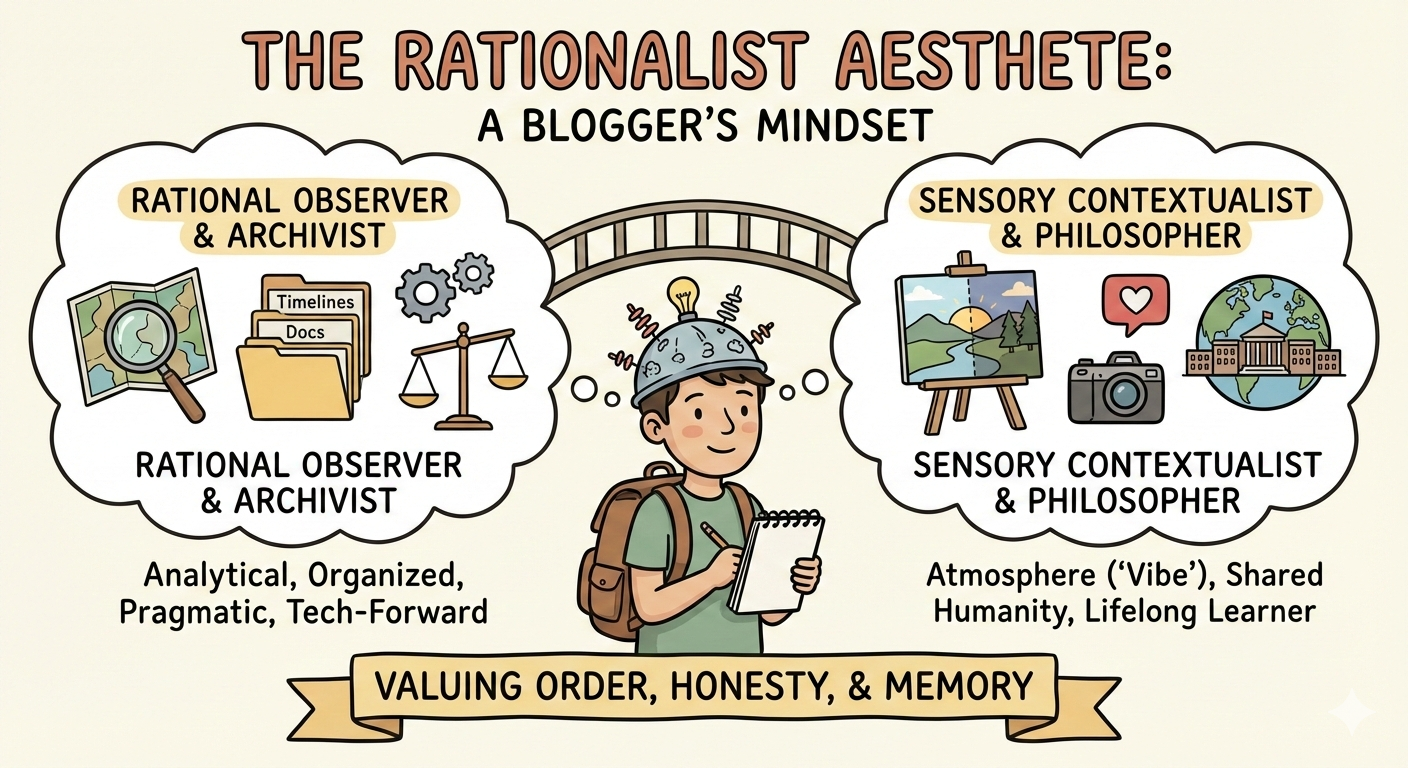
아직 제대로 된 출판사에서 뭔가를 출판한 적이 없어서 작가라고 해도 되는지 잘 모르겠지만 이런 저런 글을 많이 써봤으니 작가라고 해도 될 거라는 가정을 하고선 이런 질문을 던져봤다. 근데 잘 생각해보니 본업나 부업을 통한 출판된 기록은 꽤 많으니까 작가라고 해도 되지 않을까?
익명성을 가지고 계속 써오고 있는 블로그의 글을 한번 구글 제미나이 (Google Gemini)에게 분석을 시켜봤다. 분석 결과를 읽어보니 전체 내용을 다 분석한 것 같지는 않고 몇몇 글들을 샘플링해서 분석한 듯한 느낌이 들고 최근에 쓴 글들에 좀 더 비중을 둔 듯한 느낌이 강하게 들지만 전반적으로 맞는 말인 것 같다.
프롬프트를 이렇게 입력했다. Analyze the general psychology and philosophy of the writer of this blog: https://nobeldream.tistory.com.
결과는 이렇다. 영어가 기본 언어라서 영어가 먼저였지만 한글로 자연스럽게 번역한 버전도 만들어봤으니 그걸 먼저 늘어보면:
--
nobeldream.tistory.com 블로그의 글을 바탕으로, 필자의 내면세계를 **'이성적 탐미주의자'**라는 키워드로 분석해 보았습니다. 전체적인 심리 구조와 철학적 관점을 한국적 정서에 맞게 자연스럽게 정리해 드립니다.
1. 심리적 특성: 분석적 시선과 기록의 미학
- 치밀한 관찰력과 분석적 태도: 필자는 단순히 장소를 '방문'하는 데 그치지 않고, 그 이면의 구조를 읽어내려 노력합니다. 미국 헌법의 문구 하나를 파고들거나, 특정 지역의 미묘한 색감을 포착해내는 모습에서 사물의 본질을 논리적으로 파악하려는 욕구가 강하게 드러납니다.
- 기록을 통한 질서 확립: 2007년부터 이어진 여행 기록과 연도별/지역별로 잘 정리된 아카이브는 필자에게 '기록'이 곧 자신의 역사를 정립하는 방식임을 보여줍니다. 20여 년 전의 티켓을 보관하고 정리하는 습관은 과거와 현재를 연결하며 심리적 안정감을 얻는 면모를 시사합니다.
- 일상의 루틴을 중시하는 실용주의: 등산과 같은 취미 활동에서도 무리한 도전보다는 '삶의 루틴을 해치지 않는 선'에서의 조율을 선호합니다. 이는 감정적 과잉보다는 현실적이고 균형 잡힌 삶의 태도를 지향하는 심리 상태를 반영합니다.
- 기술에 열려 있으면서도 깊이를 찾는 태도: 생성형 AI(Gemini 등)를 적극적으로 활용하면서도, 제인 오스틴이나 유진 오닐 같은 고전적 가치를 놓지 않습니다. 디지털의 편리함을 수용하되, 그 안에 담길 내용은 아날로그적인 깊이를 추구하는 복합적인 심리를 가지고 있습니다.
2. 철학적 관점: 맥락의 미학와 사회적 책임
- 맥락주의(Contextualism)와 분위기의 철학: 필자는 '색(Color)'에 관한 글에서 프랑스의 시골과 한국의 정서적 공통점을 찾아냅니다. 이는 세상을 개별적인 개체로 보는 것이 아니라, 풍경과 빛, 분위기가 만들어내는 '맥락' 속에서 이해하려는 철학적 시선을 보여줍니다.
- 개인의 권리보다 중요한 공동체의 윤리: 총기 규제에 대한 확고한 목소리에서 알 수 있듯이, 필자의 철학은 '무조건적인 자유'보다는 **'책임 있는 규제'와 '공공의 안전'**에 무게를 둡니다. 합리적이지 않은 정치적 선동에 대해 단호한 거부감을 드러내는 등 명확한 윤리적 잣대를 가지고 있습니다.
- 끊임없이 배우는 '영원한 학생(Eternal Student)': 전 세계 대학 캠퍼스를 탐방하는 행위는 단순한 관광이 아닙니다. 대학이라는 공간이 상징하는 지적 탐구와 인류의 발전 가능성에 대한 철학적 경외심을 가지고 있으며, 스스로를 지속적으로 업데이트하려는 태도를 유지합니다.
3. 정체성: 경계에 선 관찰자 (The Observer on the Boundary)
필자는 캘리포니아라는 물리적 공간과 한국이라는 정서적 공간 사이에서 **'비교 문화적 관점'**을 견지합니다. 어느 한쪽에 매몰되지 않고 미국 사회의 허상을 짚어내기도 하며, 한국의 미학을 재발견하기도 합니다. 이러한 '경계인의 시각'은 필자로 하여금 세상을 더 객관적이고 다각적으로 바라보게 만드는 힘이 됩니다.
요약하자면
이 블로그의 필자는 차가운 이성으로 세상을 분석하고 정리하지만, 그 안에서 발견한 미묘한 색채와 예술적 가치에는 누구보다 따뜻하게 반응하는 **'이성적 탐미주의자'**라고 할 수 있습니다. 질서와 루틴을 사랑하면서도, 낯선 풍경이 주는 지적·감각적 자극을 즐기는 입체적인 인물로 보입니다.
--
영어로 된 원문은 이렇다.
Based on an analysis of the content, themes, and writing style of the blog "Travel Notes, Writer's Notes", here is a revised look at the writer’s psychology and philosophy using masculine pronouns.
1. General Psychology
- Observant and Analytical: He does not merely "visit" places; he analyzes them. Whether it is the specific "color" of a country's countryside or the "well-regulated" phrasing in the U.S. Constitution, he possesses a keen eye for detail and a drive to understand the underlying structure of his environment.
- Meticulous and Organized: The blog features highly organized "Travel Destinations" and "Timelines" of visited places dating back to 2007. This suggests a psychology that finds comfort and meaning in documentation and archiving. He values the continuity of his own history, such as keeping a concert ticket from 2001.
- Pragmatic and Routine-Oriented: He speaks about the importance of "life's routine" in his post about hiking. He prefers "light" hikes that fit into a half-day schedule so as not to disrupt his broader life structure. This indicates a disciplined, grounded psychological profile that values stability over chaos.
- Tech-Forward yet Reflective: He is an early adopter of technology—frequently mentioning Google Gemini and AI-generated imagery—but he remains deeply connected to the physical world, literature (Jane Austen, Eugene O'Neill), and the arts.
2. Philosophical Outlook
- Contextualism (The Philosophy of "Vibe"): In his post "The World of Different Colors," he expresses a philosophy where a place’s essence is found in its subtle, sensory atmosphere—colors, light, and "vibe"—rather than just its landmarks. He finds deep philosophical interest in how the "color" of rural France can evoke the "color" of rural Korea, suggesting a belief in universal patterns beneath surface differences.
- Social Responsibility over Individual Absolutism: His stance on Gun Control reveals a philosophy that prioritizes collective safety and "well-regulated" social order over absolute individual rights. He expresses a distinct frustration with political manipulation that ignores the common good, indicating a value system rooted in communal ethics and rational governance.
- Authenticity vs. Representation: He shows a recurring interest in the relationship between "Originals and Replicas." This suggests a philosophical curiosity about what constitutes the "truth" of an object or experience—whether the feeling of a replica can match the original.
- The "Eternal Student" Archetype: His habit of visiting university campuses worldwide reflects a philosophy of lifelong learning. To him, a campus is not just a school but a concentrated site of human aspiration, history, and architectural identity.
3. Cultural and Personal Identity
- Transnational Perspective: As a likely Korean-American (or a long-term resident of California), he exists in a "third space." He evaluates America through a critical, often scholarly lens while maintaining a deep connection to Korean sensibilities. This dual identity fosters a philosophy of comparative analysis, where he is constantly weighing one culture against another to find a deeper truth.
Summary: The Rationalist Aesthete
He approaches the world with the logic of a researcher—collecting data, debunking myths, and organizing timelines—but he processes that data through a highly sensitive, artistic filter that seeks out the "poetry" in his surroundings. He is a person who values order, intellectual honesty, and the preservation of memory.